

what is a pilates chair a comprehensive guide to its functions and types

Pilates is defined by precise movement control and synchronized breathing to enhance physical performance. As a compact and practical piece of Pilates equipment, the Pilates Chair has become a popular choice for home workouts, studio classes, and rehabilitation training, thanks to its space-saving design and versatile adaptability. Unlike large Pilates reformers that take up significant space, it enables core strengthening, balance training, and unilateral correction—catering to fitness beginners, professional athletes, and everyone in between.
I. Origin and Development of the Pilates Chair
II. Structure and Manufacturing Key Points of the Pilates Chair
- Frame Construction: Most frames are made of electroplated steel or solid wood to ensure load-bearing stability. Home models prioritize portability (equipped with wheels), while commercial models emphasize durability (primarily full-iron material) to prevent wobbling during training.
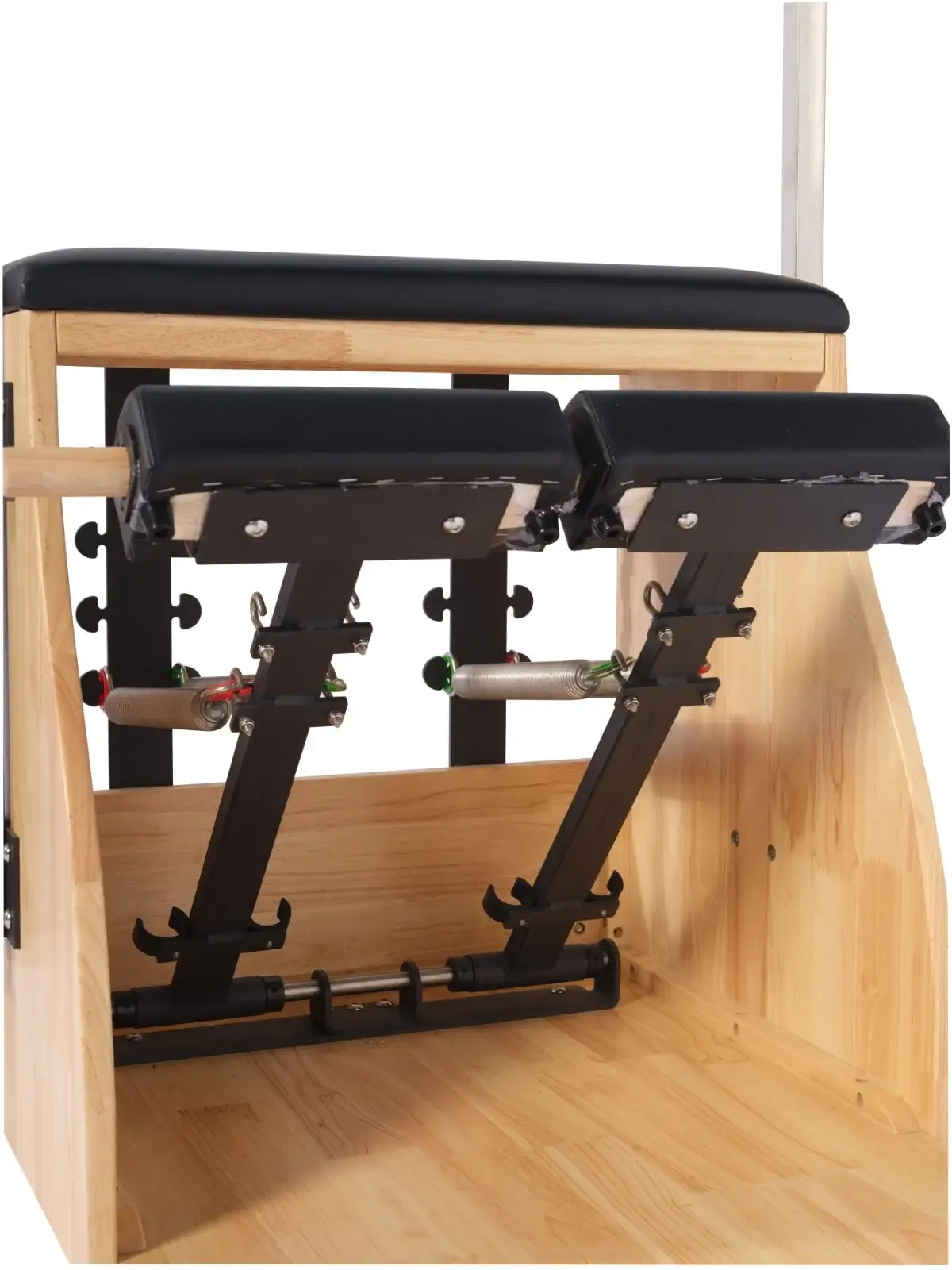
- Pedal Design: Available in one-piece and split variants. The one-piece pedal suits basic leg training, while the split pedal allows independent movement—ideal for unilateral exercises and correcting muscle imbalances (e.g., weak left legs common in runners).
- Spring Configuration: Resistance levels are the core! Traditional Wunda Chairs featured 2 springs and 3 hook sets, while modern models can have up to 4 springs. Resistance ranges from light (for shoulder/neck rehabilitation) to heavy (for athletes’ strength training), adjustable via hooks to suit different users.
- Seat and Accessories: The seat is padded with high-resilience foam and breathable leather, ensuring comfort without stuffiness even during prolonged use (solving the “sore bottom” issue of hard chairs). Optional side armrests offer better grip for beginners and the elderly, while an adjustable backrest enhances safety for rehabilitation training.
- Pre-shipment Testing & Adjustment: Before leaving the factory, check for smooth pedal movement, no abnormal spring noises (mild noise in full-iron models is normal—its simple structure makes it highly durable), and proper alignment of all components to prevent jamming during exercise.


III. Core Advantages and Functions of the Pilates Chair
- Space-Saving & Highly Versatile: Occupying only about 0.5 square meters, it fits seamlessly in apartment corners, studio partitions, or even beside a yoga mat. Despite its small size, it enables full-body training, making it a small-space fitness essential.
- Comprehensive Training Scenarios: Train your core while seated, legs and glutes while standing, and back while leaning forward—plus low-impact aerobics (e.g., continuous pedal movements). It balances strength, balance, and flexibility; just 15 minutes a day relieves sedentary fatigue for office workers.
- Dual Purpose for Training & Rehabilitation: Controllable spring resistance supports safe training: light resistance for post-surgery recovery (improving joint range of motion) and heavy resistance for athletes (building explosive power). The split pedal also corrects postural issues (e.g., high-low shoulders, anterior pelvic tilt).
- Durable & Low-Maintenance: No complex buckles or pulleys—simply wipe clean daily. The leather seat is stain-resistant, and breathable materials prevent overheating. The only minor downside: full-iron models may make slight noise when moved, easily fixed with a non-slip mat.
IV. Common Types of Pilates Chairs
- Traditional Wunda Chair: Joseph Pilates’ original design features a wooden frame and single pedal. Flippable into a seat, it’s perfect for basic movements (e.g., Tendon Stretch, Swan on the Chair) and ideal for studio beginners’ classes.
- Split-Pedal Stability Chair: With independently moving dual pedals, it specializes in unilateral training—correcting leg strength imbalances, boosting athletes’ coordination, and a top choice for small-group commercial studio classes.
- High-Back Combo Chair: Equipped with a high backrest and side armrests, the backrest supports spinal alignment. It prevents falls during standing exercises, making it ideal for rehabilitation centers and senior care facilities.
- Baby Chair: Features the lightest spring resistance, focusing on shoulder/neck and arm training (e.g., Side Bend for rounded shoulders to improve latissimus dorsi strength). It’s a dedicated tool for shoulder/neck rehabilitation.
- Modern Adjustable Model: Available with or without armrests—armrests suit beginners, while armrest-free versions target advanced users. Many models come with wheels for easy mobility and adjustable seat height, making them highly flexible for home use.
V. Pilates Chair vs. Other Pilates Equipment
| Equipment Type | Space Occupancy | Resistance System | Core Uses | Suitable Groups |
| Pilates Chair | Small (0.5㎡) | Spring-Pedal | Core strengthening, unilateral training, balance | Home users, rehabilitation clients, space-limited individuals |
| Pilates Reformer | Medium (1.5㎡) | Spring-Sled | Full-body coordination, flexibility training | All levels, studio staple equipment |
| Cadillac (Cadillac Trapeze Table) | Large (2㎡) | Full-Body Suspension Springs | Rehabilitation, assisted stretching | Post-surgery patients, professional rehabilitation clients |
| Ladder Barrel | Medium (1㎡) | Bodyweight (No Resistance) | Spinal stretching, posture correction | Beginners, office workers |
VI. Who Should Use a Pilates Chair?
- Home Users: For small-space full-body workouts, choose a wheeled modern adjustable model. Just 10 minutes daily builds core strength, and it tucks away in corners when not in use.
- Studio Owners: Opt for split-pedal or traditional Wunda Chairs to launch “Pilates Chair small-group classes,” saving space, attracting beginners, and boosting customer retention.
- Rehabilitation Clients: Use the Baby Chair for shoulder/neck discomfort and the High-Back Combo Chair for post-surgery recovery. Light resistance training protects joints and helps rebuild proper movement patterns (e.g., strengthening hamstrings after knee surgery).
- Professional Athletes: Use split-pedal chairs for unilateral control training to enhance balance and explosive power (e.g., Standing Leg Press to strengthen quadriceps for runners, reducing knee injury risk).
- Pilates Instructors: Teach signature moves like Chair Pull-Ups and Hamstring Pumping to help students feel core engagement. Vertical resistance delivers better training outcomes.
VII. How to Use a Pilates Chair? Recommended Common Moves
(1) Basic Beginner Moves
- Pedal Tapping: Sit and tap the pedal up and down slowly, targeting legs, glutes, and core. Start with low resistance to familiarize yourself with movement patterns.
- Mountain Climbers on the Chair: Support yourself on armrests, bend knees, and lift legs—strengthening shoulder/back stability and hip flexors, perfect for reducing abdominal fat in office workers.
(2) Advanced Signature Moves
- Tendon Stretch: Sit, grip armrests, lean forward—stretching hamstrings and spine to alleviate hunchback from prolonged sitting.
- Side Bend: Support with one hand on the chair, bend sideways to train obliques, shape the waist, and correct high-low shoulders.
- Swan on the Chair: Lean over the seat, support hands on the pedal, lift head and chest—strengthening back extensors and relieving back stiffness from sitting.
Summary
The Pilates Chair is not a “budget alternative to large equipment” but a small-space fitness powerhouse. It meets diverse needs—core training at home, new studio classes, and rehabilitation recovery—by leveraging its space-saving, multi-functional, and low-maintenance advantages. Choose the right model (e.g., modern adjustable for home, Baby Chair for rehabilitation) and master proper moves to unlock its full potential. When purchasing, clarify your goal (daily training or rehabilitation) and select reputable brands to ensure safety and durability.