Pilates Machines: The Ultimate Guide to Types, Benefits & Choosing the Right One
Whether you’re new to Pilates or a seasoned practitioner looking to elevate your routine, Pilates machines are game-changers in unlocking more effective, versatile workouts. Unlike mat Pilates, which relies solely on body weight, these specialized tools use springs, pulleys, and adjustable components to provide targeted resistance and support—making exercises more accessible for all fitness levels while amplifying results. From studio staples to compact home options, this guide breaks down everything you need to know about Pilates machines, including their types, benefits, and how to pick the perfect one for your goals.
Pilates machines (also called Pilates apparatus) are specialized exercise equipment designed to enhance the core-focused Pilates method developed by Joseph Pilates. They leverage springs, pulleys, and padded surfaces to deliver controlled resistance and support, allowing users to target specific muscle groups, maintain proper alignment, and reduce injury risk. Unlike one-size-fits-all fitness gear, Pilates machines adapt to beginners, advanced athletes, and even those in rehabilitation—making them versatile tools for strength, flexibility, balance, and posture improvement.
At their core, these machines turn Pilates’ signature controlled movements into more dynamic, results-driven workouts. Whether you’re looking to sculpt your core, improve spinal mobility, or recover from an injury, there’s a Pilates machine tailored to your needs.
Main Types of Pilates Machines (With Key Details)
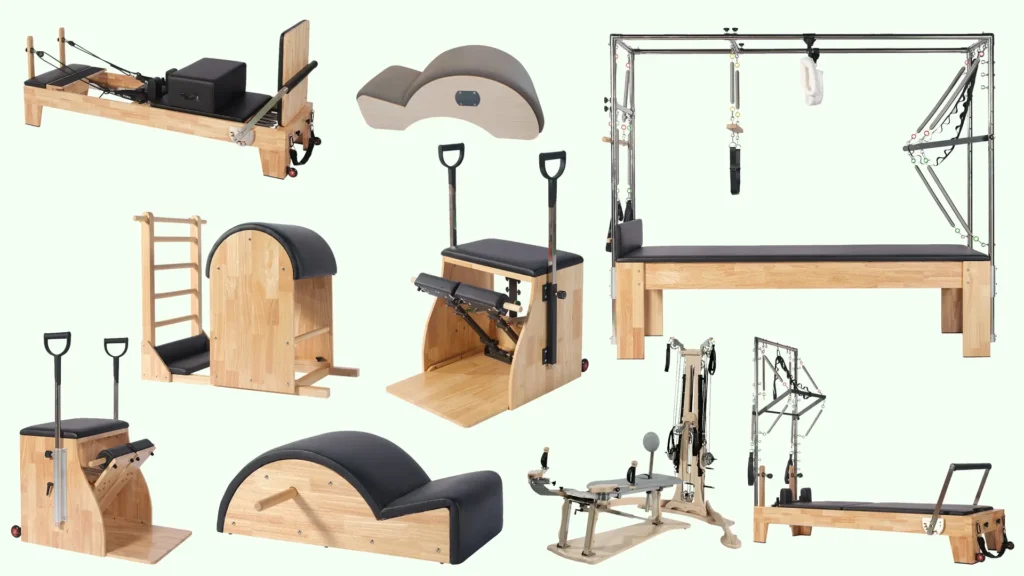
Joseph Pilates’ innovations have evolved into a range of iconic machines, each with unique designs and purposes. Below are the most popular options found in studios and home gyms alike:
1. Pilates Reformer – The Versatile Workhorse
Invented by Joseph Pilates in the 1920s, the Reformer is the most recognizable Pilates machine—and for good reason. Its design features a sliding carriage on a track, adjustable springs for resistance, and attachments like footbars, shoulder rests, and straps. This setup lets you perform exercises lying down, sitting, or standing, targeting everything from your core to your limbs.
Types of Reformers:
- Professional/Studio Reformers: Sturdy, high-quality machines built for frequent use in gyms. They accommodate all body types and often include a tower attachment for extra versatility.
- Home Reformers: Compact, foldable, and budget-friendly—perfect for small spaces. They skip the tower but still deliver a full-body workout.
- Reformer With Tower: Combines the traditional Reformer with a vertical tower (complete with springs and trapeze bars). Ideal for studios or home gyms wanting maximum exercise variety.
Who It’s For:
Beginners to advanced practitioners, anyone wanting a comprehensive full-body workout, or those in rehabilitation.
2. Pilates Cadillac (Trapeze Table) – The All-In-One Studio Staple
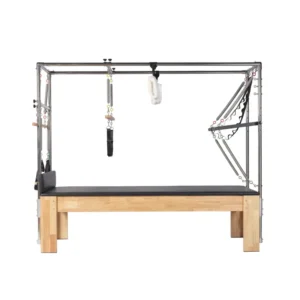
Also known as the Trapeze Table, the Cadillac is a large, rectangular frame with a padded surface, vertical/horizontal bars, and a range of attachments (trapeze bar, push-through bar, leg/arm springs). Its design supports everything from gentle stretches to advanced acrobatics, making it a favorite for therapeutic use and full-body conditioning.
Key Features:
- Movable trapeze bar for hanging or swinging exercises.
- Push-through bar and roll-down bar for core and spinal workouts.
- Adjustable springs for customized resistance.
Who It’s For:
Rehabilitation patients, advanced practitioners, and anyone seeking comprehensive support for strength, flexibility, and mobility.
3. Pilates Chair – Compact Powerhouse
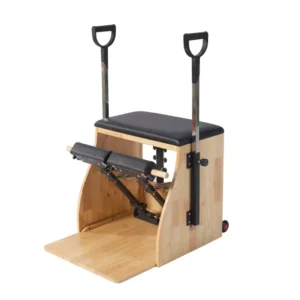
Originally designed to double as a regular armchair, the Pilates Chair is perfect for small spaces. It supports standing, seated, and lying exercises, focusing on core strength, balance, and muscle toning—all without taking up much room.
Types of Pilates Chairs:
- Wunda (Low) Chair: A compact box with a spring-loaded pedal. Great for targeting core, legs, and arms, and suitable for all fitness levels.
- High (Electric) Chair: Taller with a padded backrest and elevated seat. Offers more leverage for advanced leg, glute, and core exercises.
- Arm Chair: Focused on upper-body strength (arms, shoulders, upper back). Features resistance springs on armrests, making it ideal for posture correction and rehabilitation.
Who It’s For:
Home users with limited space, beginners, advanced athletes, and anyone recovering from upper-body or core injuries.
4. Pilates Barrel – Spinal Health Specialist
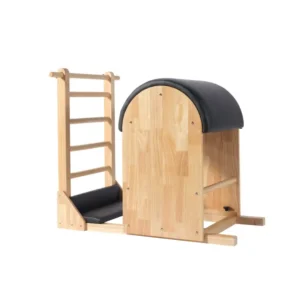
Shaped like a rounded barrel, this machine is all about improving spinal flexibility, alignment, and core strength. It’s a staple for targeting the back, hamstrings, and abdomen—with designs tailored to different needs.
Types of Barrels:
Ladder Barrel: Combines a curved barrel with a ladder-like frame. Perfect for spinal articulation, stretching, and balance exercises.
- Spine Corrector Barrel: Arched design that mirrors the spine’s natural curve. Great for posture improvement and gentle spinal mobilization.
- Arc Barrel: Smaller and more portable. Ideal for home workouts, focusing on spinal mobility and core engagement.
Who It’s For:
Anyone with postural issues, those recovering from back injuries, or practitioners wanting to deepen their stretch and core strength.
5. Small Pilates Equipment – Compact & Effective
For those short on space or looking to complement larger machines, small Pilates tools deliver big results:
- Pilates Mat: The foundation of mat Pilates—uses body weight for pure, challenging workouts. Pair with weights or bands for extra resistance.
- Pilates Bands: Versatile resistance bands that enhance mat, Reformer, or standing exercises.
- Foam Rollers: Post-workout recovery essential for relaxing tight muscles and improving flexibility.
- Stability Ball: Adds balance challenges to mat exercises (e.g., bridges, push-ups) to boost core strength.
- Pilates Rings/Hoops: Small, flexible rings that add resistance to hand or thigh exercises—perfect for mat or Reformer routines.
Essential Pilates Machine Accessories & Attachments
To expand the functionality of your Pilates machine, these accessories are a must:
- Box: Elevates your body for varied angles on the Reformer.
- Jump Board: Attaches to the Reformer for low-impact cardio (simulates jumping without joint stress).
- Pulleys & Ropes: Adjustable components for full-body resistance exercises.
- Spring Attachments: Customize resistance levels (heavier for strength, lighter for flexibility).
- Push-Through/Roll-Down Bars: Enhance core and spinal workouts on Cadillacs or Towers.
- Mirror Adjustment Plates: Help maintain proper form by checking alignment.
How to Choose the Right Pilates Machine
Selecting a Pilates machine depends on your goals, space, and fitness level. Use this checklist:
1. Align With Your Goals
- Strength & Conditioning: Opt for a Reformer (with heavy springs) or High Chair.
- Flexibility & Posture: Choose a Spine Corrector, Arc Barrel, or Cadillac.
- Rehabilitation: Go for a Reformer with Tower, Wunda Chair, or Arm Chair (light resistance, extra support).
- Home Fitness: Pick compact options like a foldable Reformer, Wunda Chair, or Arc Barrel.
2. Consider Your Space
- Studio/Gym: Invest in a Professional Reformer, Cadillac, or Ladder Barrel (sturdy, full-featured).
- Small Home: Choose a foldable Home Reformer, Wunda Chair, or small accessories (mat, bands, ring).
3. Match Your Fitness Level
- Beginners: Start with a Reformer (adjustable resistance) or Pilates Mat.
- Intermediate: Add a Wunda Chair or Arc Barrel to challenge balance and core.
- Advanced: Opt for a Cadillac, Reformer with Tower, or High Chair for complex movements.
4. Combine Machines for a Full Workout
For comprehensive results, mix machines:
- Warm up on the Reformer (full-body resistance).
- Deepen flexibility with the Cadillac or Ladder Barrel.
- Boost balance with the Wunda Chair.
- Cool down with the Spine Corrector for spinal stretches.
Key Benefits of Using Pilates Machines
Pilates machines take your workout to the next level with these science-backed benefits:
1. Enhances Core Strength
The core (abs, lower back, pelvic floor) is the foundation of Pilates—and machines like the Reformer and Cadillac target these muscles with controlled resistance. Stronger cores improve posture, reduce injury risk, and support daily movements.
2. Boosts Flexibility & Stability
Machines like the Arc Barrel and Ladder Barrel facilitate deep, safe stretches, while balance-focused tools (Wunda Chair, Stability Ball) strengthen stabilizer muscles. This combination reduces muscle tightness and improves overall stability.
3. Improves Body Coordination
Pilates machines require precise, synchronized movements (e.g., coordinating arms and legs on the Reformer). This trains your neuromuscular system, enhancing coordination that translates to daily activities and other sports.
4. Supports Rehabilitation
Low-impact, controlled movements make Pilates machines ideal for recovery. Light resistance and extra support (e.g., Arm Chair, Spine Corrector) help rebuild strength without straining injuries.
Future Trends in Pilates Machines
Pilates equipment is evolving to meet modern fitness needs—here’s what to watch for:
- Smart Technology: Real-time feedback, personalized workouts, and progress tracking (e.g., app-connected Reformers).
- Sustainable Materials: Eco-friendly designs using carbon fiber, recycled plastics, and renewable resources.
- Home-Friendly Innovation: More compact, foldable machines with studio-quality performance.
- Cross-Training Integration: Machines that blend Pilates with strength training, cardio, or yoga for holistic workouts.
Final Thoughts
Pilates machines are more than just fitness gear—they’re tools to build strength, flexibility, and balance while adapting to your unique needs. Whether you’re setting up a home gym or upgrading your studio, the right machine can transform your Pilates practice. From the versatile Reformer to the compact Wunda Chair, there’s an option for every goal and space.
Ready to take the next step? Evaluate your fitness objectives, measure your space, and choose a machine that grows with you. With Pilates machines, every workout is a step toward a stronger, more flexible, and balanced body.
