

Pilates Cadillac Reformer: What It Is & A Complete Guide to Functions, Selection & Application Scenarios
1. Origin: From a Rehabilitation Bed to a Training Essential
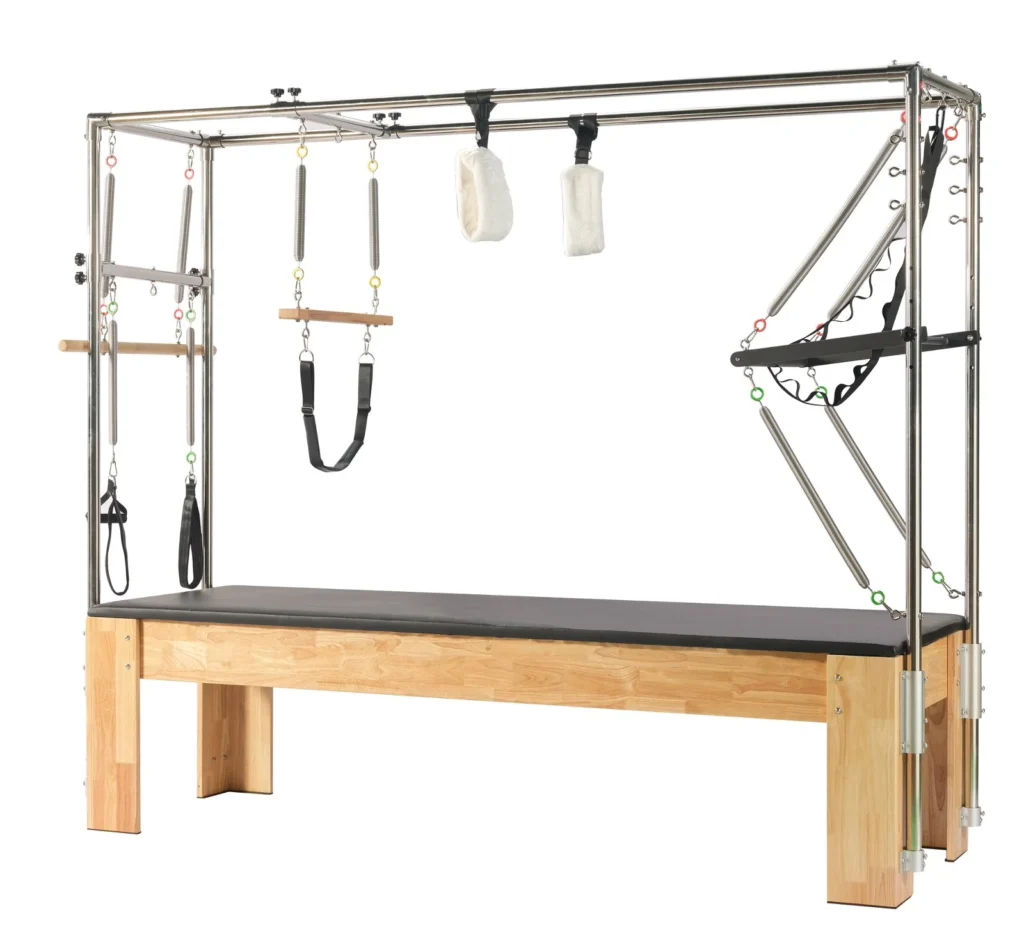
2. Structure: Every Component Plays a Key Role
The structure of this equipment is divided into a “base base” and an “upper frame”, each providing critical support for training — even beginners can quickly understand it:
2.1 Base Base: A Stable Foundation for Training Safety
- Base & Sled: Mostly made of aMaple, oak, aluminum alloy, with strong load-bearing capacity and resistance to deformation. The sled is equipped with 8 polyurethane casters and high-precision bearings, ensuring silent and smooth sliding — it maintains stability even with 8 hours of daily use.
- Resistance Springs: Comes standard with 3-5 adjustable springs (red for high resistance, green for medium resistance, yellow for low resistance). Beginners use yellow springs for core training, professional trainees use red springs for strength building, and rehabilitation patients can adjust the intensity as needed.
- Foot Pedal: Features a non-slip soft pad to prevent slipping. It serves as a support point for leg exertion and assists in adjusting arm movements; for example, during “push plate extension”, stepping on the pedal makes it easier to maintain balance.
- Shoulder Supports & Headrest: Adjustable in 3 height levels, they fix the upper body during supine training to avoid cervical spine deviation. For instance, during “supine leg spring training”, adjusting the headrest to fit the neck reduces lumbar pressure.
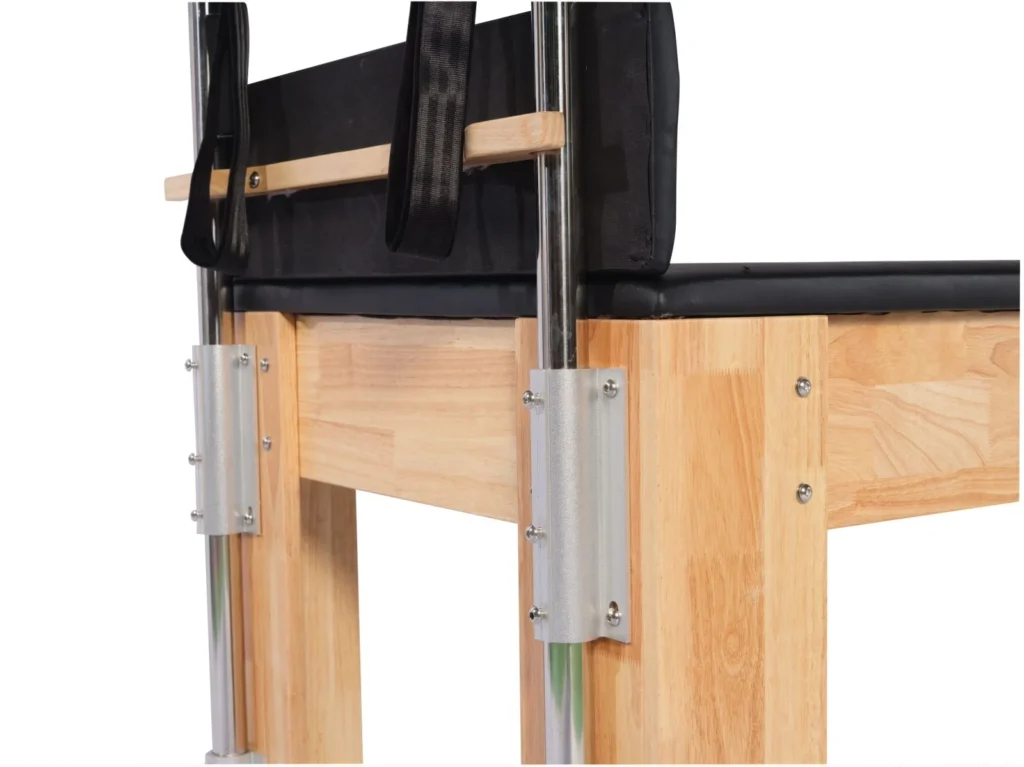
2.2 Upper Frame: Expanding Training Dimensions for Full-Body Coverage
- Trapeze Bar: Used for suspension training, such as “trapeze pull-ups”, which targets the back muscles and grip strength, and helps correct spinal posture for people with rounded shoulders.
- Ribbed Push-Through Bar & Lower Roller Bar: The push-through bar is gripped for spinal mobility, while the lower roller bar assists in stretching the shoulders and back — for example, the “push-through monkey stretch” (grabbing the bar and extending legs outward) stretches the hamstrings, ideal for runners to relax.
- Leg/Arm Straps: With moderate elasticity, they fix limbs for resistance training. For example, side-lying leg lifts with straps precisely target the obliques and gluteus medius, improving faux hip width.
- Safety Chains: Limit the range of motion of the push-through bar and trapeze bar to prevent injury from excessive movement, making it safer for rehabilitation patients.
3. Types of Pilates Cadillac Reformers: Choose Wisely by Scenario
3.1 Professional Studio Model
Full-frame design, supporting the most comprehensive trapeze and push-through bar training. It caters to private training sessions like “suspension inversions” and group classes like “tower core work” — ideal for studios specializing in “high-end Pilates classes”.
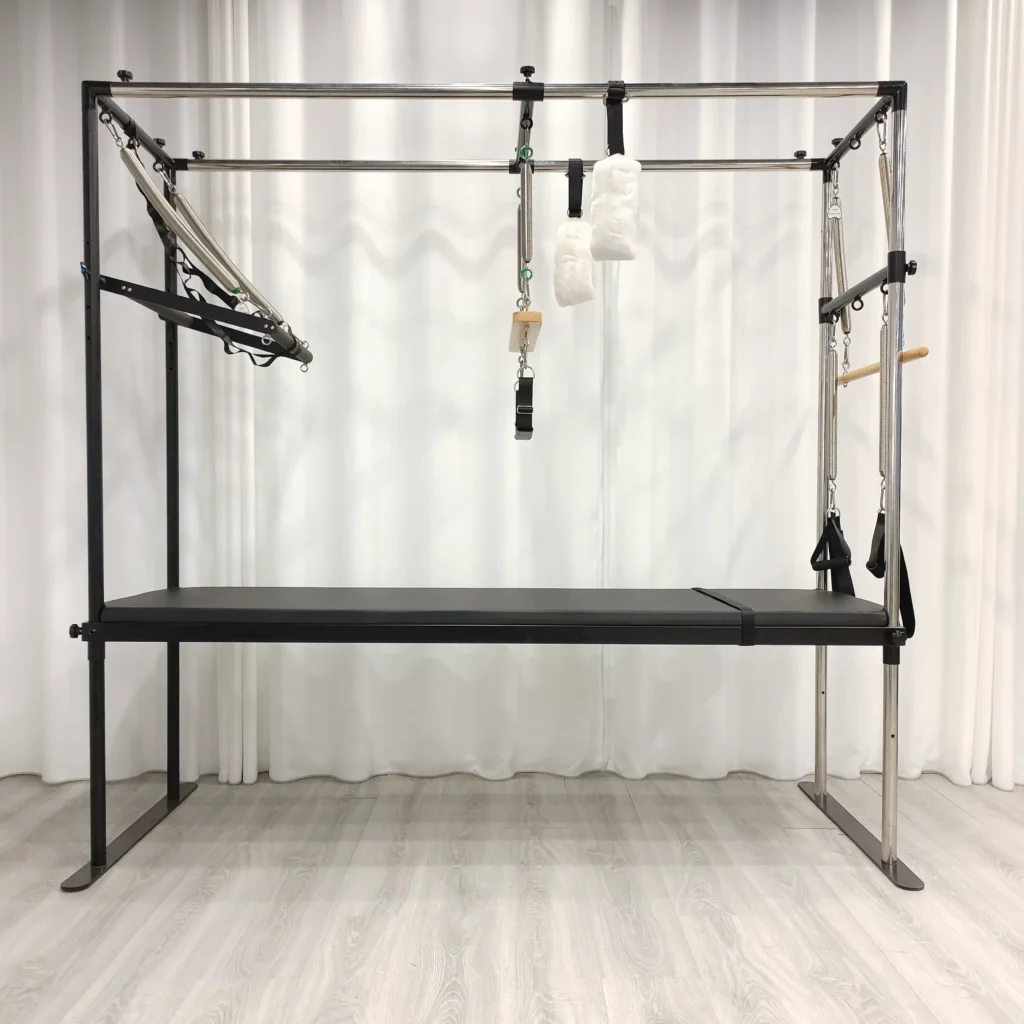
3.2 Rehabilitation-Specific Model
Thicker frame and highly precise spring adjustment (5-level resistance ). Physical therapists use it for post-operative rehabilitation; for example, helping stroke patients perform “supine arm spring training” to precisely control exertion intensity and avoid joint strain.

3.3 Classical Pilates Model
Adheres to Joseph Pilates’ original dimensions and spring settings, with a high-quality wooden frame. Suitable for studios teaching “classical Contrology classes”, it offers veteran trainees an “authentic” experience.
3.4 Modern Ergonomic Model
Equipped with adjustable pulleys and detachable shoulder supports, adapting to users of heights from 150cm to 190cm. For example, during “long-distance stretching”, pulleys adjust the height to prevent shorter users from reaching the handles.
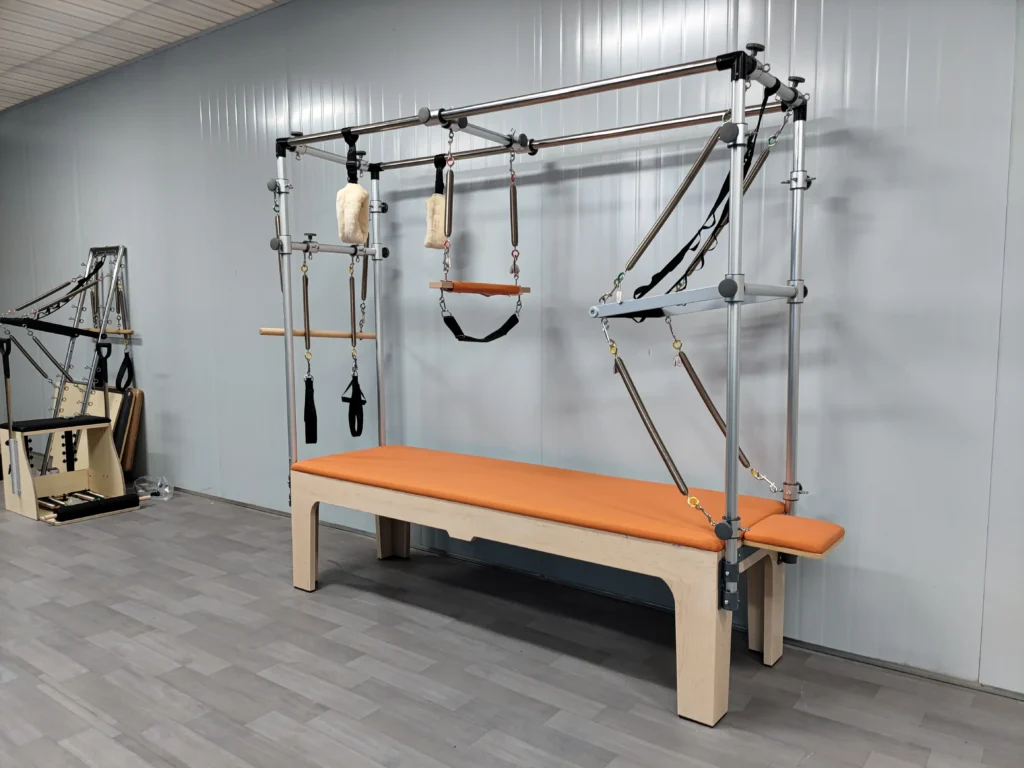
3.5 Space-Saving Model: langfis 3-in-1 Cadillac Reformer
Functions as a sliding Reformer, a suspended Cadillac, and a mat training equipment when the sled is locked. Perfect for small studios (within 20㎡) or home use — no need for extra equipment, saving space and money.
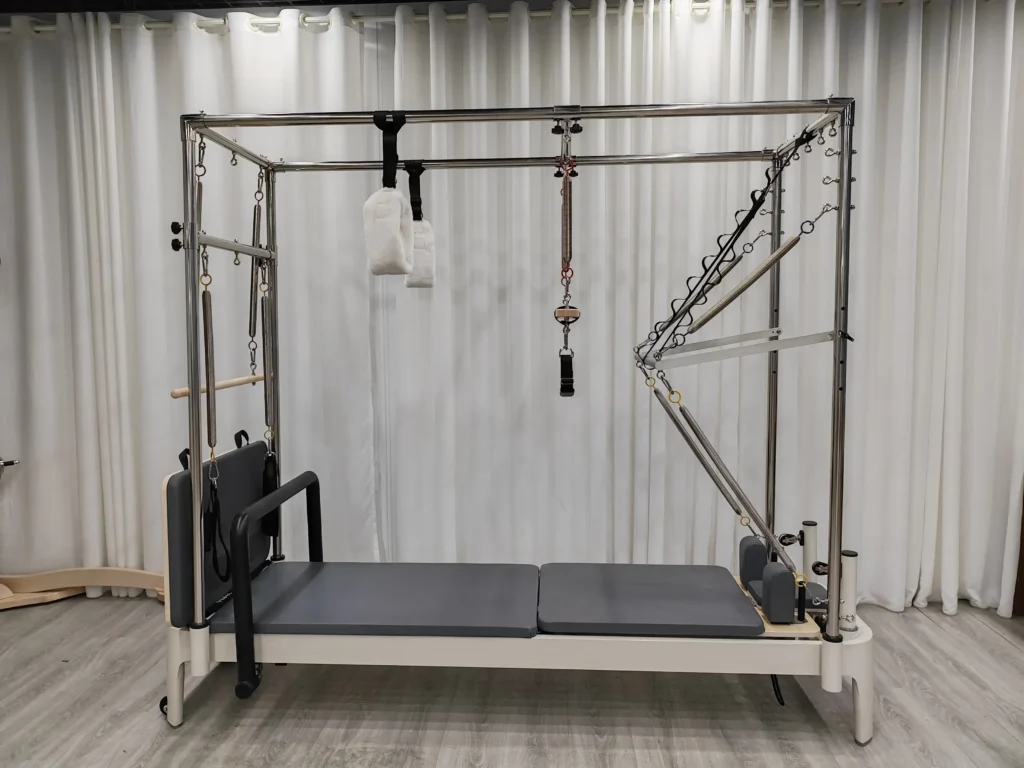
4. Cadillac Reformer vs. Stand-Alone Units: Which to Choose?
Many people wonder: should they buy a 2-in-1 Cadillac Reformer or separate stand-alone Cadillac and Reformer units? Focus on 3 core differences:
4.1 Cadillac Reformer: Ideal for "One-Stop Training"
- Advantages: One equipment enables “horizontal sliding + vertical suspension”. For example, after finishing “leg footwork” on the Reformer, you can immediately do “trapeze pull-ups” on the Cadillac without switching equipment — saving time and space.
- Disadvantages: Occupies slightly more space, requiring a minimum area of 2.5m×1.5m and a ceiling height of ≥2.8m (to avoid hitting the ceiling during aerial moves).
- Applicable Scenarios: Studios looking to enrich their courses; families wanting “whole-family shared use”.
4.2 Stand-Alone Units: Ideal for "Specialized Training"
- Stand-Alone Cadillac: Only supports vertical support training (e.g., assisted stretching, spinal mobility), suitable for clinics offering only rehabilitation classes.
- Stand-Alone Reformer: Only supports horizontal resistance training (e.g., sliding steps, long-distance stretching), ideal for beginners to build a foundation.
- Disadvantages: Occupies more space — two units require a minimum area of 3.5m×1.5m, with low long-term cost-effectiveness.
- Applicable Scenarios: Ultra-small spaces with only single-type training needs.
5. Why Pilates Instructors Love the Cadillac Reformer
- Suitable for all training levels: Adjustable springs and interchangeable accessories mean beginners use light springs for core training, professional athletes use heavy springs for strength enhancement, and rehabilitation patients use straps for low-impact movements — no need to equip multiple devices for different trainees.
- Comprehensive full-body training: Combines the “dynamic resistance” of the Reformer (e.g., sled steps for leg coordination) with the “static support” of the Cadillac (e.g., tower training for spinal stability), covering core, back, legs and glutes in one session.
- More precise rehabilitation effects: For example, postpartum mothers doing “supine leg spring training” can control resistance via springs to avoid excessive abdominal pressure — safer than mat training (no assistance, relying on body weight).
- More flexible course design: Instructors can create innovative moves, such as combining “push-through monkey stretch + sled long stretch”, keeping veteran trainees engaged and improving course retention rates.
- Cost & space savings: Placing 1 unit in a small studio replaces 2 stand-alone units, reducing rental costs and allowing more group classes.
6. 5 Exclusive Moves Only the Cadillac Reformer Can Do
- Trapeze Pull-Ups: Grab the trapeze bar and exert force with springs to target the upper body (back, shoulders) and core, improving rounded shoulders and hunchback. Office workers feel a straighter back after 1 week of practice.
- Push-Through Monkey Stretch: Lie on your back, grab the push-through bar, and extend your legs outward while straightening — stretches hamstrings and spine, relieving leg tension for runners.
- Supine Leg Springs: Secure legs with straps, lift and lower slowly — trains the core and hip flexors, allowing postpartum mothers to safely restore abdominal muscle strength.
- Tower Core Training: Pull tower straps to maintain spinal stability, strengthening the deep transversus abdominis — safer than mat crunches for people with lower back issues.
- Push-Through Breathing Exercise: Push the bar with breathing coordination to open the chest and improve diaphragmatic breathing — relieves chest tightness and shoulder neck strain for office workers.
7. Who Should Invest in a Pilates Cadillac Reformer? 5 Ideal Scenarios
- Professional Pilates Studios: Offering “classical Pilates”, “rehabilitation private training” or “high-level strength classes? Choose it to enrich course types, attract different customer groups, and increase unit prices.
- Rehabilitation Clinics: Physical therapists use it for post-operative rehabilitation; for example, helping lumbar disc herniation patients do “push-through bar spinal mobility” to precisely control movement range and speed up recovery.
- High-End Home Gyms: No need to go to a studio — practice professional moves at home. The langfis 3-in-1 model fits in a living room corner, benefiting seniors with rehabilitation needs and young people with strength training goals.
- Sports Performance Centers: Dancers do “push-through monkey stretch” to improve flexibility; swimmers do “trapeze pull-ups” to strengthen back muscles and reduce sports injuries.
- Pilates Instructor Training Institutions: Trainees learn “Reformer operation” and “Cadillac auxiliary skills” on one device, graduating ready to use professional studio equipment — improving training efficiency by 30%.
8. How to Use a Pilates Cadillac Reformer: Quick Start for Beginners
8.1 Sliding Training (Using the Sled)
- Basic Footwork: Step on the non-slip pedal and push the sled back and forth — trains leg muscles (quadriceps, hamstrings). Beginners practice slowly to avoid knee hyperextension.
- Long Stretch: Lie down, grab the handles, and extend the entire body as the sled pulls back — builds shoulder and back strength. People with rounded shoulders see results in 1 week with 10 minutes of daily practice.
- Medium Box Series: Sit on the medium box for crunches — more stable than mat crunches, reducing lumbar pressure. Prioritize this for beginners with weak core strength.
- Leg Circles: Secure legs with straps and make circular movements — trains hip flexibility. Postpartum mothers use this to improve pelvic floor muscle relaxation.
8.2 Cadillac/Tower-Specific Training (Using the Upper Frame)
- Push-Through Bar Training (Sitting/Supine): Sit or lie down, grab the bar, and rotate the upper body left and right — mobilizes the spine. People with lower back issues use light resistance to relieve back pain.
- Tower Resistance Training: Pull tower straps for arm open/close movements — targets the rotator cuff, relieving mouse hand for office workers.
- Side-Lying Leg Springs: Lie on your side and lift legs with springs — precisely trains the obliques and gluteus medius, improving faux hip width better than mat side leg lifts.
9. 6 Key Tips to Avoid Pitfalls When Buying a Pilates Cadillac Reformer
- Clarify Usage Purpose: Choose the “langfis 3-in-1” for home use, the “Gratz classic model” for classical Pilates, and the “Merrithew model” for rehabilitation — wrong selection wastes functions.
- Measure Space Dimensions: Requires a 2.5m×1.5m area, ceiling height ≥2.8m, plus 0.5m of movement space to avoid hitting furniture.
- Check Material Durability: Choose rock maple (strong load-bearing) or stainless steel (rust-proof) for the frame, polyurethane casters for silent and wear-resistant sliding, and sweat-resistant, scratch-proof padding.
- Verify Adjustability: Springs with at least 3 resistance levels, adjustable shoulder supports and headrest, and non-slip foot pedals — otherwise, uncomfortable for users of different body types.
- Calculate Cost-Effectiveness: Avoid ultra-low prices — cheap brands have loose springs that need replacement in 1 year, costing more than branded models (e.g., langfis) in the long run.